Rainy Weather Vehicle Protection: Lessons from Our Experience
From indicator malfunctions to hybrid battery warnings, we’ve seen how rain and water can create serious problems in modern vehicles. These insights come directly from our technical inspections and real client experiences. Here’s what to watch out for and how to keep your car safe on wet roads.
S.D. Samarasinghe - Managing Director - Auto Support
11/28/20252 min read
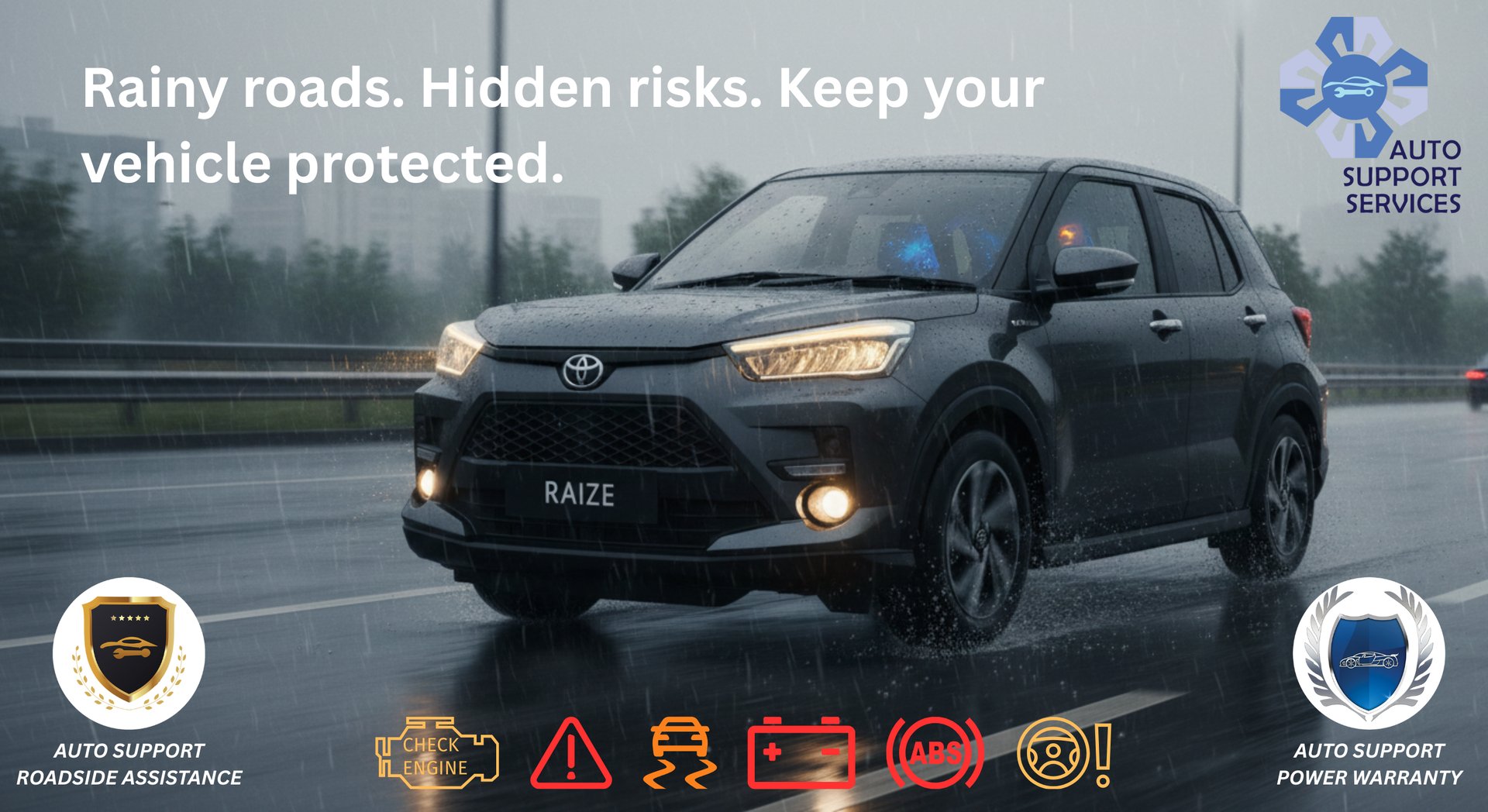
Rainy weather can affect more than just driving comfort—it can also impact your vehicle’s performance, safety systems, and long-term reliability. At AUTO SUPPORT SERVICES, through years of hands-on experience and observations from our clients, we’ve identified several common issues that occur when vehicles are exposed to rain and water. Here’s what you need to know to protect your car.
1. Indicator Lights Activating in Rain
From our inspections, we’ve seen that some vehicles’ indicator lights may turn on automatically during heavy rain. This usually happens when radar signals are not properly activated, rather than a direct electrical fault.
Our Advice: Avoid driving through deep water and schedule an inspection if your indicators behave unusually.
2. Radar Brake Warning Malfunctions
Our client vehicles, especially small Japanese models like Wagon R, Alto, and Hustler, sometimes show radar brake warnings during rainy conditions. Water spray or puddles can temporarily block radar sensors, causing dashboard alerts or temporary loss of detection.
Our Advice: Keep radar sensors clean and avoid driving through water that splashes onto sensor areas.
3. Hybrid Battery & Electrical System Risks
We’ve observed hybrid vehicles with water accumulation under the front passenger seat or near EPS modules. While minor wetness may not immediately affect the battery, deeper water can:
Prevent the hybrid battery from charging
Cause short circuits
Trigger “Idle Stop” failure warnings
Our Advice: Avoid crossing deep water, keep hybrid components dry, and arrange system inspections or reprogramming when necessary.
4. Electrical Brake System Vulnerabilities
Modern Japanese and European vehicles with electronically-controlled brakes can fail if exposed to deep water. From our experience, vehicles like Wagon R and Toyota Raize have shown sensor failures or warnings after driving through water above half wheel height.
Our Advice: Never drive through water higher than half the wheel height and avoid strong water splashes under the car.
5. Auto Adjuster Noise & Failure in Older Vehicles
Older Wagon R (MH44S, MH55S) and Alto models sometimes experience auto brake adjuster noise or failure when brake components get wet.
Our Advice: Keep brake components dry and have post-rain inspections performed.
6. Safe Driving on Wet Roads
Through client feedback and field experience, we know that wet roads mixed with oil or fuel spills are extremely slippery, increasing the risk of skidding or serious accidents—regardless of vehicle size.
Our Advice: Reduce speed, maintain a safe distance, and avoid sudden braking or acceleration.
Key Takeaways from Our Experience
Avoid driving through water deeper than half the wheel height.
Protect hybrid and electrical components from water exposure.
Inspect electrical, braking, and radar systems after heavy rain.
Seek professional help immediately for warning lights, unusual noises, or performance issues.
At AUTO SUPPORT SERVICES, our advice is based not just on theory, but real-world cases and client experiences. Protecting your vehicle in rainy weather ensures safety, preserves system reliability, and extends the life of your car. Drive safely and stay alert!
AUTO SUPPORT SERVICES (PVT) LTD
Sri Lanka’s trusted vehicle warranty and 24/7 roadside assistance partner for exporters, dealers, and vehicle owners.
Protecting petrol, diesel, hybrid, PHEV, and EV vehicles with confidence.
Warranty & Support
Hotline: (+94) 070 2 707 707
Email: info@autosupport.lk
Service Hours: 24/7 roadside assistance support
Coverage: Islandwide, Sri Lanka
© 2026 AUTO SUPPORT SERVICES (PVT) LTD. All rights reserved.
Trusted by exporters, importers, dealers, and motorists across Sri Lanka.